The Science of Electronics Analog Devices
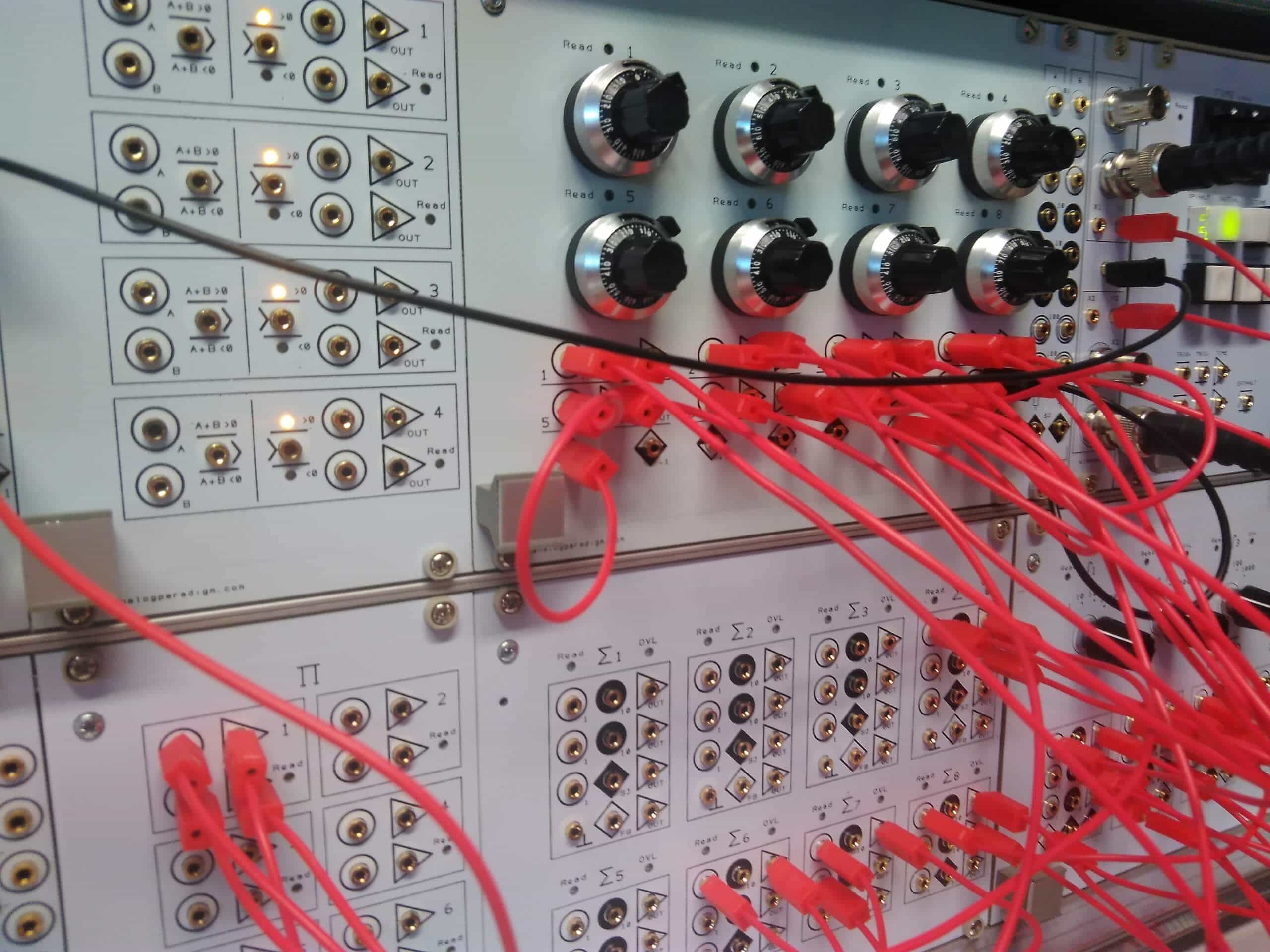
The science of electronics analog devices centers on the manipulation of continuous electrical signals to represent, measure, or process physical phenomena. Unlike digital systems that rely on discrete binary states, analog devices operate across an infinite spectrum of voltage and current levels, forming the foundational bridge between physical reality and electronic computation.
Introduction to Analog Electronics and Continuous Signals
At the heart of electrical engineering and applied physics lies the distinction between digital and analog domains. While digital electronics quantifies data into strict zeroes and ones, the science of electronics analog devices deals with continuous-valued signals that can take any value within a given range. This makes analog circuitry indispensable for capturing physical variables—such as temperature, pressure, light intensity, and sound waves—which inherently fluctuate in a smooth, uninterrupted manner.
Understanding analog devices requires a firm grasp of fundamental circuit theory, including Ohm's law, Kirchhoff's circuit laws, and electromagnetic principles. These concepts govern how passive and active components interact to shape, amplify, and filter electrical waveforms. Because the natural world is fundamentally continuous, analog devices remain the primary interface for any system that interacts with physical environments, even within predominantly digital architectures.
Core Categories of Analog Electronic Components
Analog electronics relies on a diverse array of components categorized into passive devices, which consume or store energy without providing gain, and active devices, which introduce gain and require an external power supply to operate.
Passive Components: Resistors, Capacitors, and Inductors
Passive components are the bedrock of any circuit, responsible for establishing operating points, filtering frequencies, and storing temporary energy.
- Resistors: Control current flow and divide voltages by introducing opposition to electrical current, translating electrical energy into heat.
- Capacitors: Store energy electrostatically in an electric field, blocking direct current (DC) while allowing alternating current (AC) to pass, making them essential for coupling and filtering.
- Inductors: Store energy magnetically when electrical current passes through them, resisting changes in current and serving alongside capacitors to tune resonant circuits.
Active Devices: Diodes, Transistors, and Operational Amplifiers
Active components provide non-linear control over current and voltage, enabling signal amplification, rectification, and switching functions.
- Diodes: Allow current to flow in only one direction, forming the basis for signal rectification and voltage regulation.
- Transistors (BJT and FET): Act as variable switches or amplifiers, using a small control signal at the base or gate to regulate a much larger current flowing through the collector/drain.
- Operational Amplifiers (Op-Amps): High-gain electronic voltage amplifiers with differential inputs, capable of performing mathematical operations such as addition, subtraction, integration, and differentiation when configured with external feedback components.

Comparison of Passive and Active Analog Devices
| Component Type | Primary Function | Energy Source Required | Common Applications |
|---|---|---|---|
| Resistor | Limit current, divide voltage | No | Bias networks, pull-up/down circuits, load simulation |
| Capacitor | Store electrostatic charge, filter AC | No | Power supply decoupling, AC coupling, timing circuits |
| Inductor | Store magnetic energy, block high frequencies | No | RF tuning, electromagnetic interference (EMI) filtering, power smoothing |
| Diode | Restrict current direction | No | Rectification, signal demodulation, reverse-polarity protection |
| Transistor | Amplify signals, switch currents | Yes (DC Power) | Audio amplification, signal modulation, linear regulation |
| Operational Amplifier | Mathematical signal processing, high-gain amplification | Yes (DC Power) | Active filters, instrumentation amplifiers, sensor conditioning |
Mathematical Foundations and Circuit Analysis Techniques
Analyzing analog circuits demands rigorous mathematical modeling to predict how voltages and currents behave over time and across different frequencies. Circuit design leverages linear differential equations derived from Maxwell's equations, simplified through lumped-element models at standard operating frequencies.
Network Theorems
Engineers utilize several established theorems to simplify complex analog networks into manageable equivalents:
- Ohm's Law and Kirchhoff's Laws: Provide the instantaneous algebraic relationships for voltage drops, current loops, and node potentials.
- Thevenin's and Norton's Theorems: Allow complex linear active networks to be reduced to a simple equivalent voltage source (or current source) in series (or parallel) with a single impedance.
- Superposition Theorem: Enables the analysis of circuits with multiple independent sources by calculating the response to each source individually and summing the results.
Frequency Domain Analysis
Because analog signals frequently vary in time, analysis often shifts from the time domain to the frequency domain using the Fourier Transform and Laplace Transform. By expressing signals as sums of sinusoidal waves of varying frequencies, engineers can evaluate filter cutoff frequencies, phase shifts, and system stability margins using Bode plots and Nyquist criteria.
Practical Applications in Modern Systems
Despite the dominance of digital microprocessors, analog devices are more prevalent than ever. They operate invisibly inside consumer electronics, industrial machinery, and scientific instrumentation.
Sensor Interface and Signal Conditioning
Sensors generate extremely weak, noisy analog voltages that cannot be processed directly by microcontrollers. Analog signal conditioning chains use instrumentation amplifiers, low-noise filters, and voltage references to clean, scale, and buffer these signals before they reach an Analog-to-Digital Converter (ADC).
Power Management and Conversion
Efficiently distributing power in battery-operated devices and industrial grids requires analog circuitry. Linear regulators and switching-mode power supplies (SMPS) rely on analog feedback loops to maintain stable output voltages despite fluctuating input loads and temperatures.
Troubleshooting and Design Challenges in Analog Engineering
Designing and troubleshooting analog hardware requires a different mindset than digital debugging. While digital circuits often fail catastrophically or function correctly, analog circuits suffer from subtle degradations caused by physical realities.
Noise, Distortion, and Thermal Drift
- Thermal Noise (Johnson-Nyquist Noise): Caused by the random thermal agitation of electrons inside electrical conductors and resistors, setting a fundamental noise floor for sensitive measurements.
- Electromagnetic Interference (EMI) and Crosstalk: Unwanted coupling of energy from high-speed digital lines or power supplies into sensitive analog signal paths, mitigated through proper shielding, grounding, and differential signaling.
- Component Tolerance and Drift: Variations in component values due to manufacturing tolerances, aging, and temperature fluctuations can alter circuit gain and frequency response, requiring precision calibration or temperature-compensated components.
Frequently Asked Questions
What is the primary difference between analog and digital electronics?
Analog electronics utilize continuous signals that can vary smoothly across an infinite range of values, whereas digital electronics process discrete signals represented by binary states (zeros and ones). Analog devices interface directly with the physical world, while digital systems excel at data storage, computation, and complex logic operations.
Why are operational amplifiers so important in analog design?
Operational amplifiers provide extremely high voltage gain and input impedance while maintaining low output impedance. By applying negative feedback, engineers can precisely control their behavior to perform mathematical operations, build active filters, and buffer delicate sensor signals without loading down the source.
How do passive components affect circuit frequency response?
Passive components like capacitors and inductors exhibit reactance—opposition to AC that varies with frequency. Capacitors offer lower impedance at higher frequencies, while inductors do the opposite. Combining them creates reactive voltage dividers that form low-pass, high-pass, band-pass, or notch filters.
What causes noise in analog circuits, and how can it be minimized?
Noise stems from thermal agitation of electrons, semiconductor junction imperfections, and external electromagnetic interference. It can be minimized by selecting low-noise components, implementing proper printed circuit board (PCB) grounding techniques, using differential signaling, and shielding sensitive traces.
Are analog devices becoming obsolete due to advanced microprocessors?
No. While digital processing power continues to grow, the physical world remains fundamentally analog. Sensors, actuators, power management systems, and radio frequency (RF) front-ends all rely entirely on analog circuitry to bridge physical phenomena with digital computing.
Next Steps for Analog Circuit Design
To deepen your expertise in the science of electronics analog devices, begin by constructing fundamental circuits on a breadboard using discrete resistors, operational amplifiers, and function generators. Measure signal behavior using an oscilloscope to observe phase shifts, frequency attenuation, and transient responses firsthand. Review foundational texts on semiconductor physics and linear circuit analysis to strengthen your theoretical framework for advanced analog system design.
Image Gallery
Select an image to open it in a new tab.