Martin Electronic Structure: Foundations and Theoretical Methods
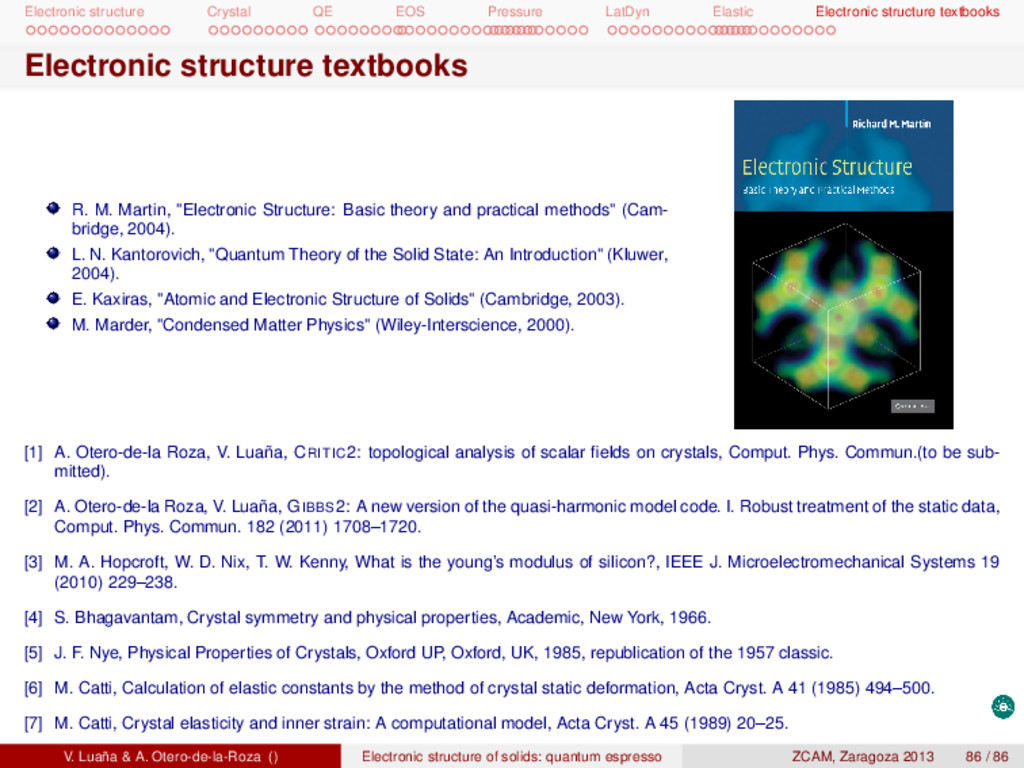
Richard M. Martin's authoritative textbook, Electronic Structure: Basic Theory and Practical Methods, serves as a foundational reference for physicists, materials scientists, and chemists exploring quantum mechanical descriptions of condensed matter. Published by Cambridge University Press, this comprehensive volume bridges the gap between fundamental many-body quantum mechanics and modern computational implementations, providing researchers with the mathematical and physical frameworks required to model atoms, molecules, liquids, and solids.
Understanding the behavior of electrons in condensed matter is essential for predicting material properties, designing novel functional compounds, and interpreting complex experimental data. This guide explores the core theoretical frameworks, computational methodologies, and practical applications detailed within Martin's framework, equipping researchers with a structured approach to electronic structure theory.
The Fundamental Many-Body Problem
The primary challenge in electronic structure theory stems from the quantum mechanical many-body Hamiltonian. A macroscopic or microscopic system containing $N$ electrons and $M$ nuclei is governed by a Hamiltonian that accounts for kinetic energy, Coulomb interactions between electrons and nuclei, electron-electron repulsion, and nuclear-nuclear repulsion. Exact analytical solutions for this Hamiltonian are impossible for systems with more than one electron due to the complex correlations governing particle motion.
To make the problem tractable, approximations must be introduced without sacrificing physical accuracy. The first major simplification is the Born-Oppenheimer approximation, which decouples the fast electronic motion from the slow nuclear motion. Because nuclei are thousands of times heavier than electrons, they can be treated as stationary backgrounds while electrons adjust instantaneously to nuclear configurations. This reduces the problem to solving the electronic Hamiltonian for a fixed set of nuclear coordinates.
Even under the Born-Oppenheimer approximation, the electronic wave function depends on $3N$ spatial coordinates, creating an exponential scaling wall known as the many-body curse of dimensionality. Theoretical physics relies on systematic approximations—primarily wavefunction-based methods and density functional theory—to bypass this computational bottleneck and calculate total energies, charge densities, and excitation spectra.
Core Theoretical Frameworks
Electronic structure theory is broadly categorized into two major methodological families: wavefunction methods and density functional methods. Martin provides a rigorous comparative foundation for understanding how these approaches handle electron correlation and computational scaling.
Wavefunction-Based Methods
Wavefunction methods attempt to solve the Schrödinger equation directly by constructing approximations for the many-body electronic wave function $\Psi$.
- Hartree-Fock (HF) Theory: Assumes the wave function can be represented as a single Slater determinant of single-particle orbitals. It accounts for exchange energy exact-form but neglects electron correlation (the instantaneous interactions between electrons of opposite spins).
- Post-Hartree-Fock Methods: Include techniques such as Configuration Interaction (CI), Møller-Plesset Perturbation Theory (MP2/MP4), and Coupled Cluster (CC) theory. While highly accurate for molecules and small unit cells, their steep computational scaling ($O(N^5)$ to $O(N^7)$ or worse) limits their application to large periodic solids.
Density Functional Theory (DFT)
Density Functional Theory, rooted in the Hohenberg-Kohn theorems and the Kohn-Sham equations, shifts the variable of interest from the many-body wave function (a function of $3N$ variables) to the electron density $n(\mathbf{r})$ (a function of only 3 spatial variables).
The Kohn-Sham formalism maps the interacting many-body system onto an auxiliary system of non-interacting electrons moving in an effective potential. The accuracy of DFT depends on the approximation used for the exchange-correlation energy functional ($E_{xc}$). Common rungs on Jacob's Ladder of density functionals include:
- Local Density Approximation (LDA): Assumes the exchange-correlation energy at any point depends only on the local electron density.
- Generalized Gradient Approximation (GGA): Incorporates the gradient of the electron density ($\nabla n(\mathbf{r})$), improving bond lengths and cohesive energies.
- Meta-GGAs and Hybrid Functionals: Include kinetic energy density or a fraction of exact Hartree-Fock exchange, significantly improving band gap predictions for semiconductors and insulators.
Practical Computational Methods and Basis Sets
Translating continuous quantum mechanical equations into computer-processable algorithms requires expanding wave functions or electron densities in specific mathematical basis sets. The choice of basis set dictates computational efficiency and physical reliability.
| Basis Set Type | Description | Primary Advantages | Typical Applications |
|---|---|---|---|
| Plane Waves | Periodic functions ($e^{i\mathbf{G}\cdot\mathbf{r}}$) independent of atomic positions. | Mathematically simple, unbiased, easy to calculate Pulay forces. | Periodic solids, metals, surfaces, high-pressure physics. |
| Localized Orbitals | Atom-centered functions (Gaussians, Slater-type orbitals, or numerical tables). | Highly efficient for sparse systems; natural representation for molecules. | Molecular systems, cluster models, localized insulators. |
| Augmented Plane Waves | Combines plane waves in interstitial regions with atomic-like functions near nuclei. | Accurately captures rapid wave function oscillations near nuclear cores. | All-electron calculations, heavy elements, precise core-level properties. |
Pseudopotentials and projector augmented-wave (PAW) methods are frequently paired with plane-wave basis sets. By replacing chemically inert core electrons and the steep all-electron potential with a smooth pseudopotential, computational algorithms dramatically reduce the required energy cutoff and number of plane waves.
Comparison of Electronic Structure Approaches
Selecting the appropriate theoretical framework requires balancing accuracy, system size, and computational resources. The table below outlines key trade-offs across standard methodologies.
| Methodology | Scaling Behavior | Primary Strengths | Major Limitations |
|---|---|---|---|
| Standard DFT (LDA/GGA) | $O(N^3)$ | Highly versatile; treats hundreds of atoms efficiently; good structural properties. | Underestimates band gaps; fails for strongly correlated $d$- and $f$-electron systems. |
| Hybrid DFT | $O(N^3)$ to $O(N^4)$ | Improves band gaps and thermochemistry compared to GGA. | Computationally demanding; expensive for large periodic systems. |
| DFT+$U$ | $O(N^3)$ | Corrects on-site Coulomb self-interaction in transition metal oxides. | Requires empirical adjustment of the $U$ parameter. |
| Quantum Monte Carlo (QMC) | $O(N^3)$ to $O(N^4)$ | Directly captures electron correlation; highly parallelizable. | Extremely high prefactor; statistical noise in forces. |
Applications in Materials Science and Condensed Matter Physics
Electronic structure calculations serve as a predictive engine across diverse scientific domains. By solving the underlying quantum equations, researchers can derive macroscopic observables directly from microscopic constants (such as Planck's constant and electron mass).
Structural Relaxation and Dynamics
Calculating total energies as a function of atomic positions allows algorithms to locate minimum-energy geometries. Hellmann-Feynman forces guide atoms toward equilibrium, enabling the simulation of phase transitions, defect formation energies, and surface adsorption kinetics.
Electronic and Transport Properties
Band structures and density of states (DOS) reveal whether a material behaves as a metal, semiconductor, or insulator. Advanced extensions, such as nonequilibrium Green's functions (NEGF) combined with DFT, allow researchers to model quantum transport through molecular junctions and nanoscale electronic devices.
Spectroscopy and Optical Response
Simulating core-level excitations, X-ray absorption spectra (XAS), and nuclear magnetic resonance (NMR) parameters provides a direct link between theoretical models and experimental characterization techniques, facilitating unambiguous material identification.
Frequently Asked Questions
What makes Martin's Electronic Structure different from standard quantum chemistry texts?
Martin's book focuses heavily on periodic boundary conditions, translational symmetry, and methods tailored for extended condensed matter systems (solids, liquids, and surfaces), whereas many traditional chemistry texts emphasize isolated molecules and localized Gaussian basis sets.
Why is electron correlation difficult to model in large systems?
Electron correlation requires tracking the simultaneous positions of multiple interacting particles. Because the motions of electrons are correlated to avoid one another, simple mean-field approximations fail, and computational complexity scales non-linearly with system size.
When should one choose plane waves over localized orbitals?
Plane waves are ideal for periodic systems because they do not suffer from the Pulay stress error and provide a systematic way to converge total energy. Localized orbitals are preferred for isolated molecules, sparse systems, or all-electron calculations where core regions require high angular resolution.
How do hybrid functionals improve upon standard DFT?
Standard LDA and GGA functionals suffer from a self-interaction error where an electron interacts spuriously with its own charge cloud. Incorporating a percentage of exact Hartree-Fock exchange counteracts this error, yielding significantly more accurate band gaps and localized defect levels.
Next Actions and Further Exploration
To deepen your expertise in electronic structure calculations, begin by working through the foundational exercises in Martin's text, focusing on the derivation of the Hartree-Fock equations and Bloch's theorem for periodic lattices. Complement your theoretical study by running practical calculations using open-source density functional theory codes such as Quantum ESPRESSO, ABINIT, or VASP. Validate your convergence parameters—such as plane-wave kinetic energy cutoffs and Brillouin zone k-point grids—to ensure numerical stability before tackling complex research systems.
Image Gallery
Select an image to open it in a new tab.
