
Cloud privacy and security misconceptions often lead organizations to rely on flawed assumptions, creating significant vulnerabilities in their digital infrastructure. While cloud service providers deliver robust physical and platform-level safeguards, customers retain ultimate responsibility for data classification, identity management, and application security configurations.
The Shared Responsibility Model: Who Protects What?
One of the most persistent cloud privacy and security misconceptions is that migrating infrastructure to a major cloud provider means the provider handles 100% of the security. In reality, all major hyperscalers operate under a framework known as the Shared Responsibility Model. Understanding this division of labor is critical for preventing breaches and maintaining regulatory compliance.
Under this model, the cloud provider secures the infrastructure that runs the services offered in the cloud. This includes the hardware, software, networking, and facilities running the cloud services. Conversely, the customer remains responsible for security in the cloud. This encompasses customer data, client and server-side data encryption, network traffic protection, operating system configuration, identity and access management, and application-level controls.
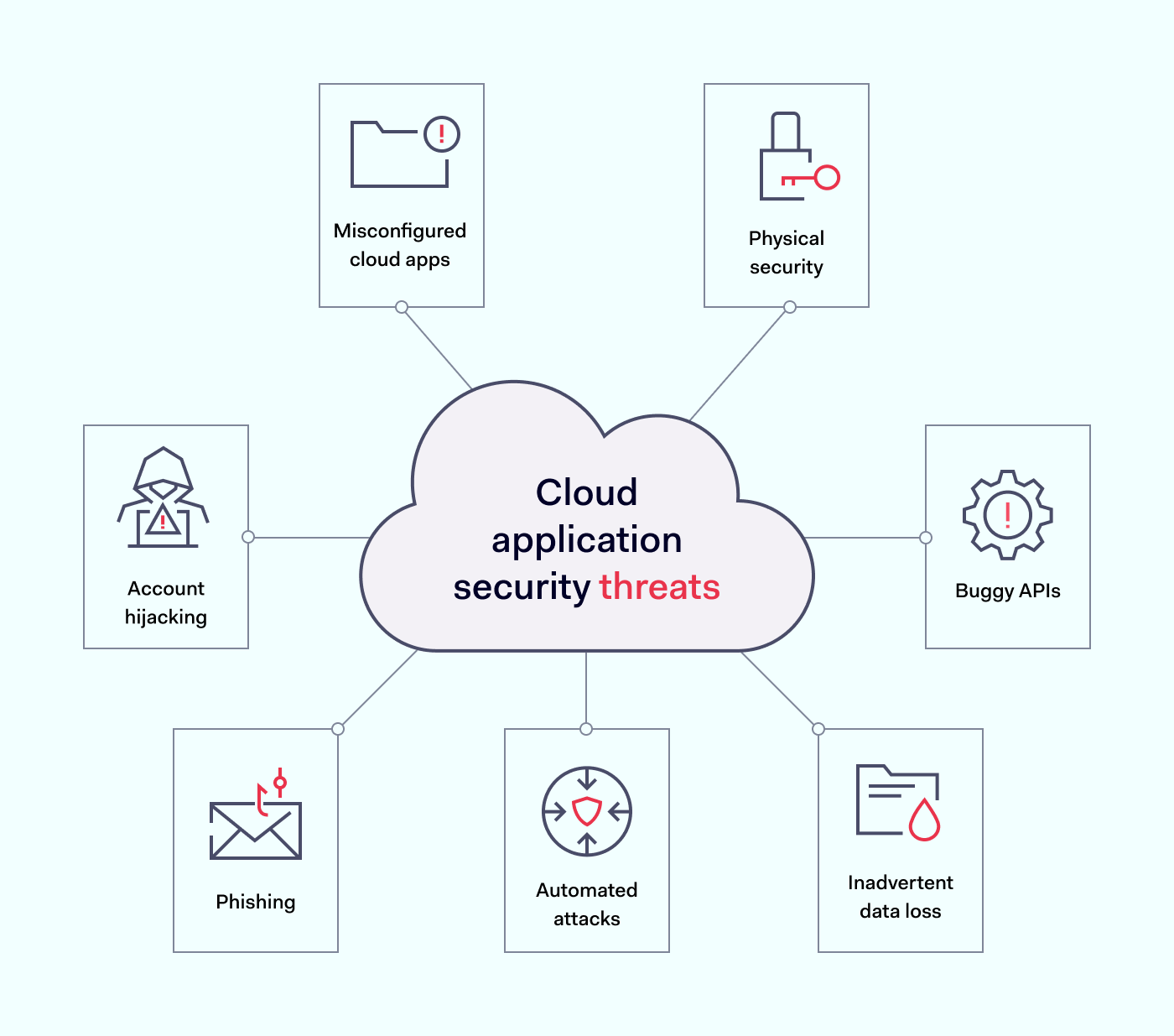
Misunderstanding this boundary often leaves storage buckets open to the public, access keys hardcoded into repositories, and databases unpatched at the application layer. When a data breach occurs due to a misconfigured resource, the provider’s infrastructure is usually secure; the compromise stems entirely from the customer's side of the shared responsibility line.
- CUSTOMER RESPONSIBILITY IN THE CLOUD
- Data Classification & Integrity
- Identity & Access (IAM)
- Application-Level Controls
- Client & Server Encryption
- PROVIDER RESPONSIBILITY OF THE CLOUD
- Hardware & Infrastructure
- Compute, Storage, Database
- Global Network & Edge Locations
- Facilities & Datacenters
Myth vs. Reality: Common Misconceptions Examined
To build a resilient cloud architecture, organizations must deconstruct prevalent myths regarding data safety, regulatory compliance, and operational control. The following table contrasts common cloud privacy and security misconceptions with verifiable technical realities.
| Common Misconception | Technical Reality |
|---|---|
| "The cloud is inherently insecure compared to on-premises data centers." | Cloud providers employ security tooling, hardware-level encryption, and continuous monitoring that most enterprise internal teams cannot match. |
| "Compliance (e.g., SOC 2, HIPAA, GDPR) is automatically inherited upon migration." | Providers supply compliant infrastructure, but the customer must configure applications, logging, and data handling to meet regulatory standards. |
| "Data stored in the cloud is always encrypted by default." | While storage options support encryption, customers often must explicitly enable, manage, and rotate encryption keys using key management services. |
| "Cloud providers can access, read, or monetize customer data at will." | Enterprise service terms restrict access. Strong zero-knowledge encryption ensures that even if data is intercepted, providers cannot read plain text. |
Data Privacy vs. Cloud Security: Clarifying the Definitions
Many professionals use "privacy" and "security" interchangeably, but they represent distinct, interdependent disciplines within cloud computing. Conflating the two can lead to gaps in data governance.
- Cloud Security focuses on protecting systems, networks, programs, devices, and data from cyberattacks, unauthorized access, or damage. It involves firewalls, intrusion detection systems, multifactor authentication, and patch management.
- Cloud Privacy dictates how data is collected, processed, shared, stored, and deleted in compliance with legal regulations and user consent. It addresses data minimization, residency requirements, and user rights to access or erase personal information.
An organization can have robust security—preventing unauthorized external actors from breaching the perimeter—while simultaneously violating privacy laws by collecting user data without proper consent or retaining it longer than permitted. Both domains require distinct operational workflows, policy enforcement, and technical tooling.
The Encryption Myth: At Rest, In Transit, and In Use
Encryption is frequently misunderstood as a silver bullet for cloud privacy and security. Organizations often assume that checking a box labeled "encryption enabled" completely shields their data from all threats.
In practice, data exists in three distinct states, each requiring specific cryptographic controls:
- Data in Transit: Data moving across networks between the user, the application, and the cloud storage layers. This requires robust transport layer security (TLS) protocols, modern cipher suites, and certificate management to prevent interception and man-in-the-middle attacks.
- Data at Rest: Data stored persistently within databases, object storage, or block volumes. While providers offer server-side encryption managed by the platform, high-security environments often mandate customer-managed keys (CMKs) to ensure the provider never holds the decryption keys.
- Data in Use: Data actively processed in memory by applications. Historically vulnerable during processing, confidential computing technologies now use hardware-based Trusted Execution Environments (TEEs) to encrypt data while in use, preventing even hypervisor-level administrators from viewing memory contents.
Regulatory Compliance and Data Sovereignty Concerns
Another widespread misconception is that storing data in a global cloud environment absolves an organization of geographic data residency laws. Governments worldwide enforce strict regulations regarding where personal and financial data can be stored and processed.
When selecting cloud regions, administrators must verify that data residency configurations align with local laws such as the European Union's General Data Protection Regulation (GDPR) or the California Consumer Privacy Act (CCPA). Merely routing data through an overseas content delivery network or caching layer can inadvertently violate cross-border data transfer restrictions, exposing the organization to legal penalties regardless of how strong the technical security controls are.
Furthermore, public sector and defense organizations must evaluate specific compliance frameworks, such as FedRAMP in the United States or IRAP in Australia, which mandate rigorous validation of cloud environments before sensitive workloads can be hosted.
Practical Steps to Overcome Misconceptions and Secure Cloud Environments
Mitigating the risks posed by cloud security misconceptions requires a proactive, structured operational strategy. Organizations should implement these core practices to harden their cloud footprint:
- Adopt Identity-First Security: Treat identity as the new security perimeter. Implement strong multi-factor authentication (MFA), role-based access control (RBAC), and the principle of least privilege across all user accounts and service principals.
- Automate Cloud Security Posture Management (CSPM): Utilize automated tools to continuously scan cloud environments for misconfigurations, exposed storage buckets, and non-compliant network rules.
- Implement Comprehensive Logging and Monitoring: Enable centralized logging for all API calls, administrative actions, and data access events using services like AWS CloudTrail, Azure Monitor, or Google Cloud Audit Logs. Integrate these logs with a Security Information and Event Management (SIEM) platform for real-time threat detection.
- Regularly Test Incident Response Plans: Conduct tabletop exercises and penetration testing specifically simulating cloud-native attack vectors, such as compromised IAM credentials or container escape vulnerabilities.
Frequently Asked Questions
Do major cloud providers back up my data automatically?
Cloud providers maintain highly resilient infrastructure designed to protect against hardware failures and datacenter outages through redundancy. However, this high availability is not the same as a backup. Providers generally do not protect against accidental deletion, ransomware encryption, or database corruption caused by application errors. Customers are responsible for implementing point-in-time backups and disaster recovery retention policies.
Can cloud providers view data stored on their servers?
Under standard enterprise service-level agreements, cloud providers do not inspect or utilize customer data. However, administrative access is technically possible at the physical infrastructure layer. To eliminate this theoretical exposure, organizations implement customer-managed encryption keys or zero-knowledge architectures, ensuring data remains encrypted with keys the provider cannot access.
Is multi-tenant cloud storage safe for sensitive enterprise data?
Yes. Modern cloud architectures use strict logical separation, virtual private clouds (VPCs), and hardware-level isolation to ensure that data residing on shared physical hardware remains completely invisible and inaccessible to other tenants sharing that infrastructure.
What is the most common cause of cloud data breaches?
Misconfiguration of cloud resources remains the leading cause of breaches. Common errors include leaving object storage buckets open to the public, assigning overly permissive IAM roles, failing to disable default credentials, and neglecting to apply timely security patches to virtual machine operating systems.
How does the shared responsibility model change in Serverless and PaaS environments?
As organizations move up the stack from Infrastructure as a Service (IaaS) to Platform as a Service (PaaS) and Serverless (Function-as-a-Service) models, the cloud provider assumes a much larger share of the operational security burden. The provider takes over operating system patching, runtime maintenance, and scaling security, allowing the customer to focus almost entirely on application code, business logic, and data access management.
Conclusion
Cloud privacy and security misconceptions stem from treating cloud environments as either completely bulletproof or inherently untrustworthy. By understanding the boundaries of the Shared Responsibility Model, implementing rigorous data encryption across all states, and enforcing strict identity management controls, organizations can leverage cloud scalability without compromising confidentiality, integrity, or compliance.
Image Gallery
Select an image to open it in a new tab.

Felix Mercer
Transnational Learning Reporter
