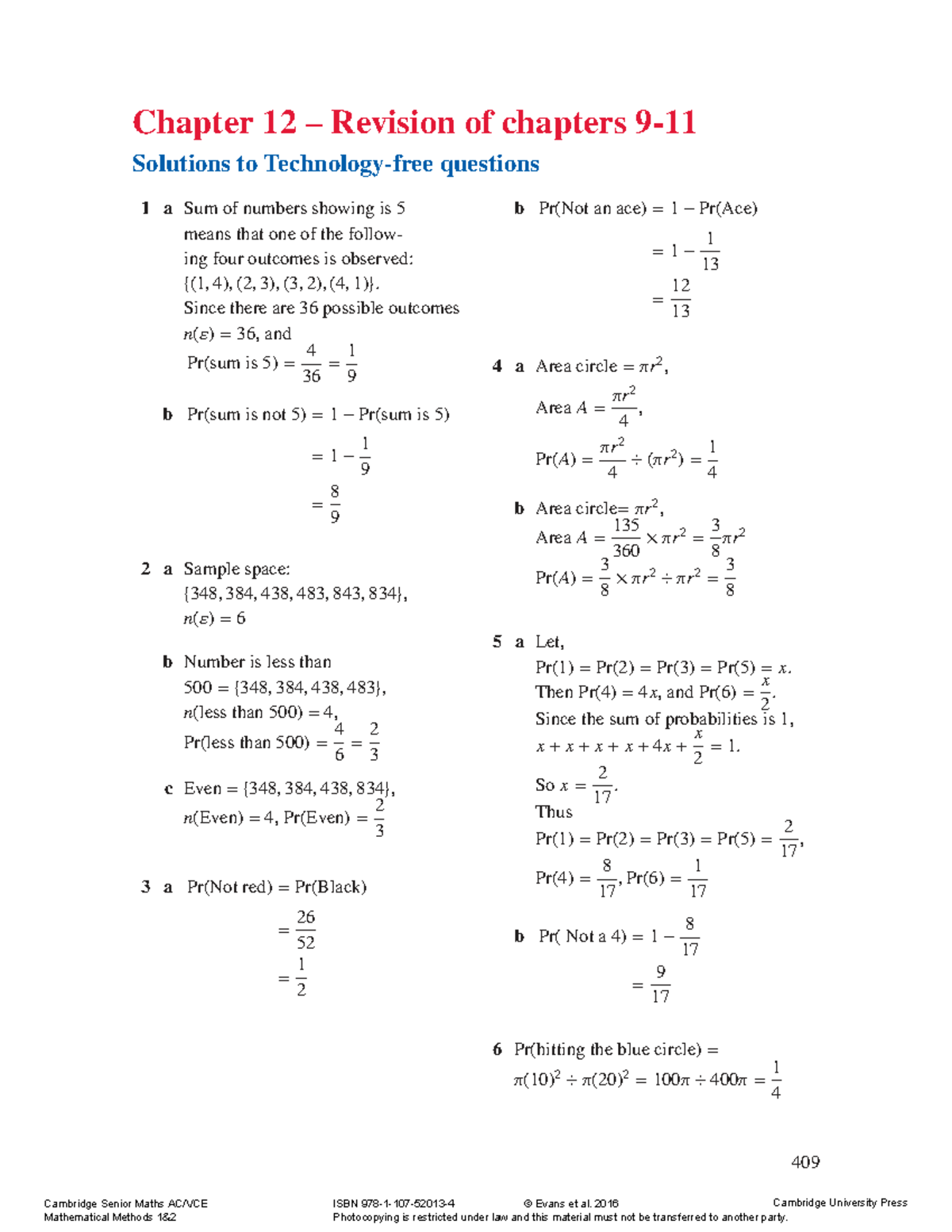
Master Guide to Solution Rohatgi Probability and Statistics: 2026 Academic Resource

The search for a comprehensive solution to Rohatgi's probability problems refers specifically to the rigorous mathematical exercises found in "An Introduction to Probability and Statistics" by Vijay K. Rohatgi and A.K. Md. Ehsanes Saleh. This text remains a cornerstone of graduate-level statistical education in 2026, serving as the primary bridge between introductory calculus-based probability and advanced measure-theoretic analysis.
As of 2026, the demand for clear, step-by-step derivations for Rohatgi’s exercises has peaked due to the increasing integration of these complex theorems into machine learning foundations and high-frequency financial modeling. This guide provides a strategic framework for approaching these solutions, ensuring academic integrity while mastering the intricate proofs required in PhD-level coursework.
The Academic Significance of Rohatgi and Saleh in 2026
The textbook by Rohatgi and Saleh is uniquely positioned in the 2026 academic landscape. Unlike more elementary texts, it demands a high level of mathematical maturity, often requiring a prerequisite understanding of real analysis. The problems are designed to test not just the application of formulas, but the structural understanding of probability spaces, random variables, and the limits of stochastic processes.
In contemporary graduate programs, Rohatgi is favored for its uncompromising depth in:
- Set-theoretic foundations of probability.
- Rigorous treatment of special distributions (Gamma, Beta, and Cauchy distributions).
- Detailed exploration of sampling distributions and their exact densities.
- In-depth coverage of sufficiency, completeness, and exponential families.
Understanding the solutions to these problems is essential for researchers who need to develop new statistical estimators or validate the convergence properties of modern AI algorithms.
Strategic Breakdown of Rohatgi Solution Categories
Solving problems in this text requires categorizing the challenge. The following table provides a breakdown of the core modules found in the 2026 curriculum and the typical technical hurdles associated with each.
| Curriculum Module | Core Chapter Focus | Technical Complexity | Solution Methodology Focus |
|---|---|---|---|
| Foundations & Set Theory | Chapters 1-2 | Moderate | Axiomatic proofs and Borel field properties. |
| Random Variables & Dist. | Chapters 3-4 | High | Transformation of variables and Jacobian methods. |
| Moments & Characteristic Func. | Chapter 5 | Very High | Taylor expansion of MGFs and inversion theorems. |
| Sampling & Limit Theorems | Chapters 6-7 | High | Convergence in distribution and Law of Large Numbers. |
| Estimation Theory | Chapters 8-9 | Extreme | Lehmann-Scheffé and Rao-Blackwell applications. |
| Hypothesis Testing | Chapters 10-12 | Extreme | Neyman-Pearson Lemma and Likelihood Ratio Tests. |

Mastering Probability Space and Random Variable Solutions
The initial chapters of Rohatgi’s text focus on the formalization of probability. Solutions in this section often involve proving that a collection of sets forms a sigma-field or calculating the probability of complex events using the inclusion-exclusion principle.
Expert Insight on Axiomatic Probability
When approaching solutions in Chapter 1, students often overlook the importance of the countable additivity axiom. In 2026, as we deal with increasingly infinite-dimensional data sets, the ability to prove that a measure is valid on a specific Borel field is a critical skill. Always begin your solution by verifying that the set function satisfies the non-negativity, normalization, and sigma-additive properties.
For Chapter 3 and 4, which deal with random variables and their distributions, the solutions frequently involve the transformation of variables. If you are deriving the density of a function of two random variables, the standard technique involves:
- Defining the joint density of the original variables.
- Determining the support of the new transformed variables.
- Calculating the Jacobian of the transformation.
- Integrating out the auxiliary variable to find the marginal density.
Advanced Statistical Inference: Estimation and Testing
The heart of the Rohatgi-Saleh text lies in its treatment of statistical inference. This is where most students seek detailed solutions, as the proofs for "Best Linear Unbiased Estimators" (BLUE) and "Uniformly Minimum Variance Unbiased Estimators" (UMVUE) are notoriously dense.
Point Estimation Challenges
In Chapter 8, the focus is on sufficiency and completeness. A common exercise requires proving that a statistic is sufficient using the Factorization Theorem. The 2026 approach emphasizes the use of the Minimal Sufficiency concept, which is foundational for data compression in large-scale statistical models.
To solve for a UMVUE, the standard 2026 workflow involves:
- Finding a sufficient and complete statistic for the parameter.
- Identifying an unbiased estimator (even a simple one).
- Applying the Rao-Blackwell Theorem by taking the conditional expectation of the unbiased estimator given the sufficient and complete statistic.
Hypothesis Testing and Power Functions
Chapters 10 and 11 deal with the Neyman-Pearson framework. Solutions here involve constructing the Likelihood Ratio (LR) and determining the critical region that minimizes Type II error for a fixed Type I error. In 2026, the application of these tests has expanded into real-time anomaly detection in cybersecurity, making the precision of these solutions more relevant than ever.
Comparing Rohatgi to Other 2026 Statistical Foundations
While Rohatgi is a standard, it is often compared with other seminal texts. Understanding where Rohatgi stands helps in choosing the right reference for your solutions.
Comparison of Graduate Statistics Textbooks
Rohatgi & Saleh vs. Casella & Berger While Casella & Berger is widely used for Master’s level courses, Rohatgi & Saleh is generally considered more mathematically rigorous. Rohatgi provides more detailed proofs for the underlying measure theory, whereas Casella & Berger focuses on the intuition and application of the theorems.
Rohatgi & Saleh vs. Billingsley Billingsley’s "Probability and Measure" is a pure probability text focusing almost entirely on measure theory. Rohatgi is more balanced, providing a strong transition from probability into mathematical statistics (inference and testing).
Step-by-Step Guide to Solving a Characteristic Function Problem
Characteristic functions (Chapter 5) are a recurring pain point for students. These functions are the Fourier-Stieltjes transforms of the distribution functions. Use the following steps to solve problems related to the Uniqueness Theorem or the Levy Continuity Theorem.
- Identify the Distribution: Determine if the random variable is discrete or continuous. This dictates whether you use a summation or an integral.
- Apply the Definition: Write the characteristic function as the expected value of exp(itX).
- Utilize Known Transforms: For standard distributions (Normal, Poisson, Binomial), leverage the known characteristic functions to solve for sums of independent variables.
- Inversion Formula: If the problem asks for the density function given the characteristic function, apply the inversion formula. Ensure you check for the integrability of the characteristic function to guarantee the existence of a continuous density.
- Check Convergence: In 2026, limit theorems are often solved by showing that a sequence of characteristic functions converges to the characteristic function of a known distribution (like the standard Normal).
Navigating Digital Solutions and Study Groups in 2026
In 2026, several resources have emerged to assist with the Rohatgi-Saleh curriculum. However, the quality of "solution manuals" varies significantly.
- University Repositories: Many top-tier statistics departments (such as those at Stanford, ETH Zurich, and the Indian Statistical Institute) maintain internal solution keys for their PhD qualifying exams, which frequently feature Rohatgi problems.
- Collaborative LaTeX Platforms: Peer-reviewed platforms allow students to collaborate on solutions. Look for repositories that use modern notation and provide comments on the edge cases of theorems.
- AI-Assisted Verification: In 2026, specialized mathematical AI models can help verify the steps of a derivation. While they may struggle with the most abstract proofs, they are excellent for checking Jacobian calculations and integral evaluations.
Troubleshooting Common Errors in Rohatgi Solutions
Even advanced students encounter roadblocks when working through this text. Here are the most common pitfalls to avoid:
- Ignoring the Support: Many errors in transformation problems arise from failing to correctly map the boundaries of the new variables. Always sketch the region of integration.
- Assumption of Independence: Do not assume variables are independent unless explicitly stated. If they are dependent, you must use the joint density and the conditional distribution approach.
- Misapplying the Central Limit Theorem: The CLT requires finite variance. Rohatgi often includes "trap" problems involving Cauchy distributions where the CLT does not apply because the mean and variance are undefined.
- Uniformity Issues: When dealing with sequences of random variables, distinguish clearly between convergence almost surely, convergence in probability, and convergence in distribution.
Frequently Asked Questions (FAQ)
What edition of Rohatgi is most used in 2026?
The 3rd edition, co-authored with A.K. Md. Ehsanes Saleh, remains the standard. It contains updated sections on non-parametric inference and more modern examples compared to the original 1976 version.
Is there an official solution manual for Rohatgi’s "An Introduction to Probability and Statistics"?
There is no officially published, mass-market solution manual from the publisher for every exercise in the book. Most available "solution rohatgi probability" documents are instructor-created keys or student-collated resources found in academic repositories.
How difficult is the Rohatgi text compared to Hogg and Craig?
Rohatgi is generally considered a step up from Hogg and Craig’s "Introduction to Mathematical Statistics." While both cover similar ground, Rohatgi's proofs are more formal and rely more heavily on analytical techniques.
Why are the problems in Chapter 7 (Limit Theorems) so challenging?
These problems require a deep understanding of the Borel-Cantelli Lemmas and the different modes of stochastic convergence. Solutions often involve sophisticated epsilon-delta arguments that are common in real analysis but less common in introductory statistics.
Can I use these solutions for self-study in 2026?
Yes, Rohatgi is an excellent self-study text for those with a strong mathematical background. However, it is highly recommended to cross-reference your solutions with a peer-reviewed source or use a 2026-era computational engine to verify numerical results.
How relevant is Rohatgi to 2026 Data Science?
Extremely relevant. The foundations of Bayesian inference, MCMC methods, and the convergence of gradient descent algorithms all rely on the mathematical statistics principles detailed in Rohatgi’s chapters on convergence and estimation.
Mastering the "solution rohatgi probability" landscape requires a blend of rigorous mathematical logic, a deep understanding of statistical theory, and the persistence to work through multi-page derivations. Whether you are preparing for a qualifying exam or developing new statistical methodologies in 2026, these problems provide the ultimate training ground for academic excellence.
Image Gallery
Select an image to open it in a new tab.