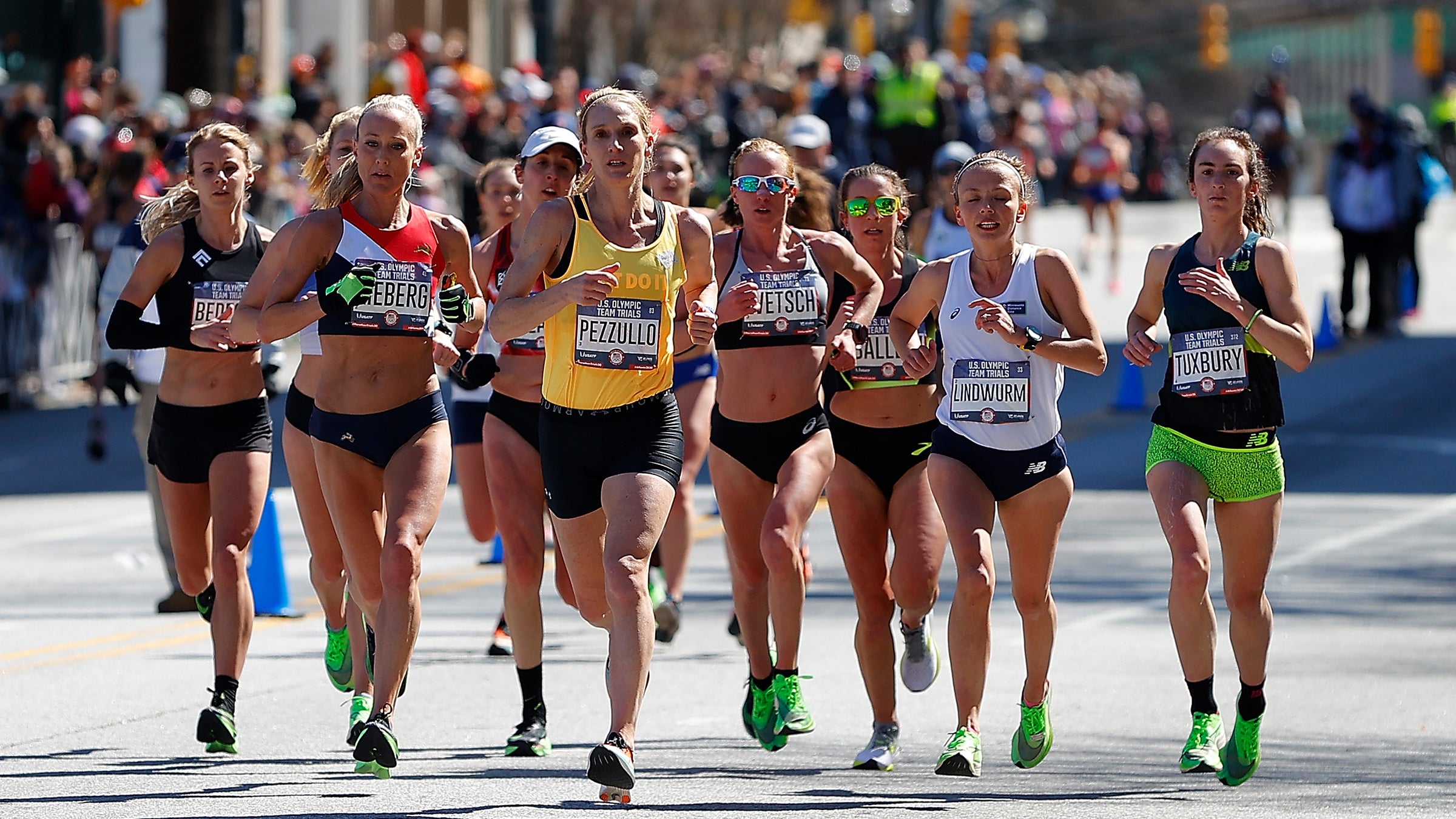
The official marathon race distance in the Olympics is 42.195 kilometers, which is equivalent to 26 miles and 385 yards. This specific measurement was standardized by World Athletics (formerly the IAAF) in 1921, based on the route established during the 1908 London Games, and has been the universal Olympic requirement since 1924.
The Historical Origins of the Marathon Distance
The concept of the marathon is rooted in ancient Greek lore, specifically the legend of Pheidippides, a messenger who supposedly ran from the battlefield of Marathon to Athens to announce the Greek victory over the Persians in 490 BCE. While historical accounts from Herodotus suggest Pheidippides actually ran from Athens to Sparta (a much longer distance), the 19th-century romanticization of the "Marathon to Athens" run provided the inspiration for the first modern Olympic Games in 1896.
During the 1896 Athens Olympics, the marathon was not yet a fixed distance. The inaugural race covered approximately 40 kilometers (24.85 miles), tracing the path from the Bridge of Marathon to the Panathenaic Stadium. Because the primary goal was to honor the legendary feat rather than adhere to a rigid metric, the distance varied significantly across the early Olympic cycles. In 1900 (Paris), the distance was approximately 40.26 kilometers, while the 1904 St. Louis Games utilized a course of roughly 40 kilometers.
The lack of standardization in these early years meant that "world records" for the marathon did not technically exist; instead, athletes competed for "world bests" on specific courses. It wasn't until the early 20th century that the Olympic committee sought a uniform distance to allow for direct comparisons of athletic performance across different venues and years.
Why is the Olympic Marathon Exactly 42.195 Kilometers?
The oddly specific distance of 42.195 kilometers is the result of a logistical decision made during the 1908 London Olympic Games. Originally, the race was planned to be 26 miles (41.84 km), starting at Windsor Castle and finishing at the Olympic Stadium in Shepherd's Bush.
However, the British Royal Family requested a specific starting point and finish line to accommodate the viewing needs of the royal household. To ensure the race began under the windows of the Nursery at Windsor Castle and finished in front of the Royal Box at the White City Stadium, an additional 385 yards were added to the planned 26-mile route.
This total distance—26 miles and 385 yards—witnessed one of the most dramatic finishes in Olympic history when Italian runner Dorando Pietri collapsed several times in the final meters and was helped across the line by officials, leading to his disqualification. The drama of the London finish captured the public's imagination, and the "London Distance" became the most famous marathon length. In 1921, the International Amateur Athletic Federation (IAAF) officially adopted 42.195 kilometers as the global standard, and it has remained the mandatory distance for every Olympic marathon since the 1924 Paris Games.

The Evolution of Marathon Distances in the Modern Olympics
Standardization was a gradual process that faced several fluctuations before the current 42.195 km mark became permanent. The following table illustrates the variance in marathon distances during the early modern Olympic era:
| Olympic Year | Host City | Approximate Distance (km) | Approximate Distance (miles) |
|---|---|---|---|
| 1896 | Athens, Greece | 40.00 | 24.85 |
| 1900 | Paris, France | 40.26 | 25.02 |
| 1904 | St. Louis, USA | 40.00 | 24.85 |
| 1908 | London, UK | 42.195 | 26.22 |
| 1912 | Stockholm, Sweden | 40.20 | 24.98 |
| 1920 | Antwerp, Belgium | 42.75 | 26.56 |
| 1924–Present | International Standard | 42.195 | 26.22 |
As of 2026, the 42.195 km distance is considered sacrosanct in the world of long-distance running. Any variation in the length would invalidate the course for Olympic qualifying times or world record considerations.
Technical Specifications and Measurement Protocols
Measuring an Olympic marathon course is a highly technical process governed by strict World Athletics and Association of International Marathons and Distance Races (AIMS) protocols. To ensure the distance is exactly 42.195 kilometers, official measurers use the Calibrated Bicycle Method, which involves a device known as a Jones Counter.
The Jones Counter and Calibration
The Jones Counter is a mechanical gear-driven device mounted on the front wheel of a bicycle. It counts the revolutions of the wheel with extreme precision. Before a course can be measured, the bicycle must be calibrated on a "calibration base"—a straight stretch of road measured with a steel tape that has been temperature-corrected. This ensures that the measurer knows exactly how many "counts" on the device equal a specific distance on that specific day, accounting for tire pressure and temperature changes.
The Short Course Prevention Factor
To prevent a course from accidentally being even a few centimeters too short (which would disqualify any records set on it), measurers apply a "Short Course Prevention Factor" of 0.1%. This means that for every kilometer measured, an extra meter is added. Consequently, an officially certified Olympic marathon course is actually measured to be at least 42.237 kilometers. This "buffer" ensures that even if a runner takes slightly wider turns than the measurer, they are guaranteed to have completed at least the full 42.195 kilometers.
The Sprung Line (The Blue Line)
In most Olympic marathons, a dashed blue line is painted on the road. This line represents the "Shortest Possible Route" (SPR) that the course measurers took. If a runner follows this line perfectly, they will run the exact 42.195 km (plus the prevention factor). Deviating from this line by taking wide turns can add significant distance—sometimes hundreds of meters—over the course of the race.
Olympic Marathon Course Design and Environmental Factors
While the distance of the Olympic marathon is fixed, the terrain and environmental conditions vary significantly between host cities. Unlike major city marathons (like Berlin or Chicago) which often prioritize flat, fast courses for world record attempts, the Olympic marathon is a tactical race where the primary goal is the medal, not the time.
Elevation and Terrain
Olympic courses are designed to showcase the host city's landmarks, often resulting in challenging elevations. For example, the Paris 2024 Olympic marathon course was notable for its significant incline, featuring a 438-meter elevation gain and a maximum grade of 13.5%. Such variations mean that an Olympic marathon "record" is often slower than the world record, as the athletes must contend with hills that disrupt their rhythm.
Weather and Start Times
Because the Summer Olympics typically occur in July or August, heat and humidity are major factors. To protect athlete safety, Olympic marathons are frequently scheduled for very early in the morning. In extreme cases, such as the Tokyo 2020 Games (held in 2021), the marathon events were moved to Sapporo, hundreds of miles north of the host city, to take advantage of cooler temperatures.
Qualifying and Performance Standards for Olympic Athletes
Competing in the Olympic marathon requires more than just running the distance; athletes must meet rigorous qualifying standards set by World Athletics. As of the current 2026 cycle, the qualification process involves a dual-pathway system:
- Entry Standards: Athletes must achieve a specific time on a certified course within a designated qualifying window. For the most recent cycles, these times have become increasingly stringent, often requiring men to run sub-2:08:10 and women to run sub-2:26:50.
- World Rankings: Athletes who do not meet the direct entry time may qualify based on their position in the World Athletics Rankings, which aggregates points from various high-level competitions.
Furthermore, each National Olympic Committee (NOC) is generally limited to three athletes per gender for the marathon. This leads to intense internal competition in powerhouse running nations like Kenya and Ethiopia, where dozens of athletes may have met the qualifying time, but only three can be selected.
Common Challenges and Strategy in the Olympic Marathon
The 42.195-kilometer distance presents unique physiological challenges that differ from shorter road races. The "wall," a phenomenon where runners experience sudden fatigue and loss of energy, typically occurs around the 30-to-35-kilometer mark (18 to 22 miles). This is the point where the body’s glycogen stores in the liver and muscles are depleted, forcing the body to burn fat more heavily, which is a less efficient process.
Nutrition and Hydration
Olympic athletes utilize sophisticated fueling strategies to mitigate the "wall." World Athletics regulations allow for "personal refreshment stations" at 5-kilometer intervals. Athletes provide their own customized carbohydrate-electrolyte drinks, which are placed on tables by officials. Missing a bottle at the 30km or 35km mark can be the difference between a gold medal and a "DNF" (Did Not Finish).
Tactical Pacing
Unlike "paced" marathons where "rabbits" (pacemakers) lead the elite field for the first 30 kilometers to ensure a fast time, Olympic marathons forbid external pacemaking. The race is entirely athlete-driven. This often results in a "cat-and-mouse" game where the pack stays together at a relatively slow pace for the first half of the race, followed by aggressive surges in the final 10 kilometers.
Frequently Asked Questions
Is the marathon distance the same for men and women in the Olympics?
Yes, the marathon distance is identical for both men and women at 42.195 kilometers. While the women's marathon was not added to the Olympic program until the 1984 Los Angeles Games, it has always shared the same standardized distance as the men's event.
Why was the 1920 Olympic marathon longer than 42.195 km?
The 1920 Antwerp marathon covered 42.75 kilometers. This occurred because the official 42.195 km standard had not yet been formally adopted by the IAAF. At the time, Olympic organizers still had some leeway in course design, and the Antwerp route was designed to start at the Olympic Stadium, loop through the city, and return.
Does "chip time" count in the Olympic marathon?
In the Olympics, only "gun time" (the time from the start signal to when the athlete crosses the finish line) is used to determine finishing positions and medals. While elite athletes use timing chips for data and splits, their official ranking is based on their physical order of finish.
How is the marathon course verified for accuracy?
Courses are verified by "Grade A" or "Grade B" international measurers. They use the calibrated bicycle method and must submit a detailed measurement report to World Athletics. If a world record is broken during an Olympic marathon, a second measurement is often conducted immediately after the race to confirm the course was not short.
What is the "Blue Line" on the road?
The blue line is a painted guide that shows the most direct path along the 42.195 km course. Since every turn adds distance if taken wide, elite runners attempt to stay as close to the blue line as possible to ensure they do not run more than the required distance.
Recommendation for Aspiring Marathoners
If you are training to run a marathon distance yourself, it is essential to respect the specific 42.195-kilometer requirement by training on measured routes. For those aiming for official qualifying times, always ensure the event is certified by your national athletics federation or AIMS. Understanding the technical nuances of the "Shortest Possible Route" can save you valuable seconds and prevent the unnecessary fatigue of running extra meters on race day.
Image Gallery
Select an image to open it in a new tab.



Owen Fletcher
Collegiate Life Correspondent
