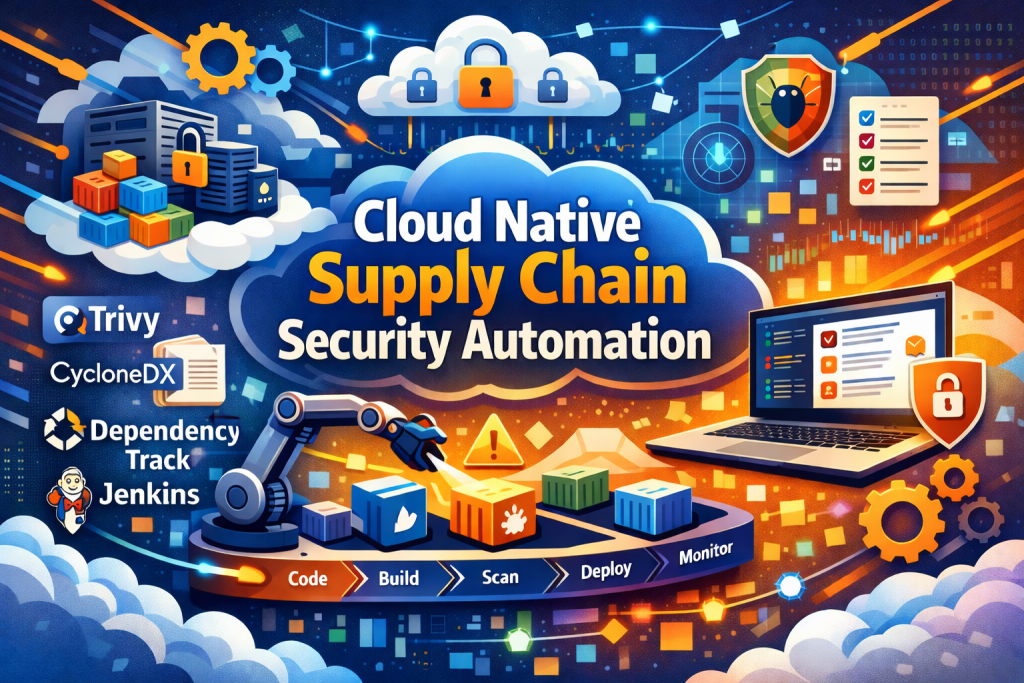
Common container and cloud-native security tools include Aqua Security, Prisma Cloud, Sysdig (Falco), Snyk, and Trivy. These solutions protect the entire software lifecycle by scanning images for vulnerabilities, enforcing Kubernetes policies, and monitoring runtime environments for suspicious activity using advanced technologies like eBPF to ensure infrastructure integrity and compliance.
The landscape of container security has shifted dramatically by 2026. Security is no longer an afterthought or a "gate" at the end of production; it is an integrated, automated component of the DevOps pipeline. As organizations increasingly rely on microservices and ephemeral infrastructure, the tools used to secure these environments must be as dynamic as the containers themselves. Understanding which tools are common—and where they fit into the "Build, Ship, Run" cycle—is essential for any modern engineering team.
The Evolution of Cloud-Native Security in 2026
In 2026, the industry has largely consolidated around the Cloud-Native Application Protection Platform (CNAPP) model. This approach moves away from fragmented point solutions toward integrated platforms that offer visibility across the entire stack. However, even within these platforms, specific open-source and proprietary tools remain the gold standard for distinct tasks.
Security in this era is defined by "Shift Left" (testing early in development) and "Shield Right" (protecting active workloads). Containers present unique challenges, such as short lifespans and shared kernels, which traditional antivirus or firewall software cannot adequately address. Consequently, the tools discussed below are designed specifically to handle the high velocity and scale of orchestrated environments like Kubernetes.
Vulnerability Management and Image Scanning
Image scanning is the first line of defense. By the time a container reaches a registry, it should have been inspected for known vulnerabilities (CVEs), hardcoded secrets, and misconfigurations.
Trivy by Aqua Security
Trivy remains one of the most popular open-source scanners due to its versatility. It is not limited to container images; it also scans filesystems, Git repositories, and infrastructure-as-code (IaC) templates. In 2026, Trivy is frequently used within CI/CD pipelines (like GitHub Actions or GitLab CI) to "break the build" if a high-severity vulnerability is detected. Its ability to generate comprehensive Software Bill of Materials (SBOMs) makes it a critical tool for compliance with modern supply chain security standards.
Snyk
Snyk has become a staple for developer-centric security. Unlike tools that target security operations teams, Snyk integrates directly into the developer’s IDE (Integrated Development Environment). It provides real-time feedback on vulnerable dependencies and, crucially, offers automated remediation suggestions. For container security, Snyk scans the base image and the application layers, helping developers choose more secure alternatives (like switching from a bloated Node.js image to a minimal "distroless" version).
Grype and Syft (Anchore)
The combination of Syft (for generating SBOMs) and Grype (for scanning those SBOMs for vulnerabilities) is a common choice for teams prioritizing modularity. By separating the identification of components from the vulnerability lookup, these tools allow for faster, more efficient scanning in high-volume environments.
Runtime Security and Threat Detection
Runtime security involves monitoring containers while they are actively running. Because containers are supposed to be immutable, any unexpected change—such as a shell being opened or a new process starting—is a potential sign of a breach.
Falco
Originally created by Sysdig and now a graduated Cloud Native Computing Foundation (CNCF) project, Falco is the de facto standard for runtime security. It uses eBPF (Extended Berkeley Packet Filter) technology to gain deep visibility into the Linux kernel without adding significant overhead. Falco monitors system calls and alerts on suspicious activity based on a customizable rule engine. For example, if a container suddenly attempts to modify a sensitive file in /etc/, Falco triggers an immediate alert or a response action.
Aqua Security (Enterprise)
While Trivy handles the open-source side, the Aqua Platform provides an enterprise-grade runtime protection suite. It offers "drift prevention," which ensures that a container cannot execute any code that was not part of its original image. This effectively neutralizes many zero-day attacks by preventing the execution of unauthorized binaries or scripts injected during a session.
Sysdig Secure
Sysdig Secure builds upon the foundation of Falco, adding a user-friendly interface, deep forensics, and compliance reporting. In 2026, Sysdig is often favored by large enterprises that need to manage security across multi-cloud environments, providing a single pane of glass for both vulnerability management and real-time threat detection.
Kubernetes Policy and Governance
As the primary orchestrator for containers, Kubernetes requires its own set of security tools to manage access control and resource configuration.
Open Policy Agent (OPA) and Gatekeeper
OPA is a general-purpose policy engine that allows you to write "Policy as Code" using a language called Rego. When used with Gatekeeper, it acts as an admission controller for Kubernetes. This means it can prevent non-compliant resources from ever being created. For example, a policy might state that "no container can run as root" or "all services must have a specific department tag."
Kyverno
Kyverno is a policy engine designed specifically for Kubernetes. Unlike OPA, it does not require learning a new language like Rego; instead, policies are written in standard YAML. Kyverno can validate, mutate, and generate Kubernetes resources. Its ease of use has made it increasingly popular for teams that want to enforce security best practices without the steep learning curve associated with OPA.
Comparison of Common Container Security Tools
| Tool | Primary Category | Open Source? | Best For | Key Technology |
|---|---|---|---|---|
| Trivy | Image Scanning | Yes | CI/CD Integration & SBOMs | Static Analysis |
| Falco | Runtime Security | Yes | Threat Detection | eBPF / Kernel Syscalls |
| Snyk | Developer Security | Partial | Dev-first Vulnerability Fixes | Dependency Mapping |
| Prisma Cloud | CNAPP | No | Comprehensive Multi-cloud | Full Lifecycle Platform |
| Kyverno | Policy Management | Yes | Kubernetes Native Policy | YAML-based Admission |
| HashiCorp Vault | Secrets Management | Partial | Managing API Keys/Certs | Identity-based Access |
Identity and Secrets Management
Traditional security relied on IP addresses, but in a cloud-native world, IPs are transient. Security now relies on Identity.
HashiCorp Vault
Vault is the industry leader for managing secrets—such as database credentials, API keys, and TLS certificates. In a containerized environment, Vault allows containers to retrieve short-lived, dynamic secrets, ensuring that even if a container is compromised, the stolen credentials will quickly expire.
SPIFFE and SPIRE
SPIFFE (Secure Production Identity Framework for Everyone) provides a standard for identifying software services in highly dynamic environments. SPIRE is the implementation of that standard. Together, they allow containers to establish mutual TLS (mTLS) connections based on cryptographically verifiable identities rather than fragile network rules.
Comprehensive Cloud-Native Platforms (CNAPP)
For organizations that prefer an all-in-one solution over a "best-of-breed" toolchain, Prisma Cloud (by Palo Alto Networks) and Wiz are the dominant players in 2026. These platforms aggregate data from image scans, runtime alerts, cloud configuration (CSPM), and network traffic to provide a unified risk score. They are particularly effective at identifying "toxic combinations"—such as a container that has a critical vulnerability, is running with root privileges, and is exposed to the public internet.
Frequently Asked Questions
Why can't I use traditional antivirus for containers?
Traditional antivirus is designed for long-lived virtual machines or physical servers. Containers are ephemeral, often living for only minutes, and share the host's Linux kernel. Antivirus software typically lacks the visibility into container namespaces and the speed required to monitor rapid container churn without degrading performance.
What is the role of eBPF in container security?
eBPF allows security tools to run sandboxed programs within the Linux kernel. This provides deep visibility into system calls, network packets, and file activity with minimal performance impact. In 2026, eBPF is the underlying technology for almost all leading runtime security tools, including Falco and various service meshes.
Is open-source security sufficient for production containers?
Open-source tools like Trivy and Falco are incredibly powerful and form the core of many enterprise security stacks. However, enterprise versions typically add features necessary for large-scale operations, such as centralized management, advanced reporting, role-based access control (RBAC), and 24/7 support.
How does "Shift Left" apply to container security?
"Shift Left" means moving security checks as early in the development process as possible. In container security, this involves scanning code for vulnerabilities during development, checking Dockerfiles for misconfigurations, and validating Infrastructure-as-Code (IaC) templates before they are deployed to a cloud environment.
What is an SBOM and why is it important for security?
A Software Bill of Materials (SBOM) is a formal record containing the details and supply chain relationships of various components used in building software. In 2026, SBOMs are essential for identifying whether a newly discovered vulnerability (like a Log4j successor) exists within your container fleet, allowing for rapid response and remediation.
Recommendation for Implementation
For organizations starting their container security journey in 2026, a tiered approach is recommended. Begin by integrating Trivy or Snyk into your CI/CD pipeline to eliminate "low-hanging fruit" vulnerabilities in your images. Next, implement Kyverno or OPA to enforce basic Kubernetes hygiene, such as preventing privileged containers. Finally, deploy Falco for runtime observability to detect and respond to active threats. If managing multiple clusters across different cloud providers, consider transitioning to a consolidated CNAPP like Prisma Cloud or Sysdig to reduce "alert fatigue" and gain a centralized view of your risk posture.
Image Gallery
Select an image to open it in a new tab.
Bianca Reyes
Electronic Banking and Assets Analyst
