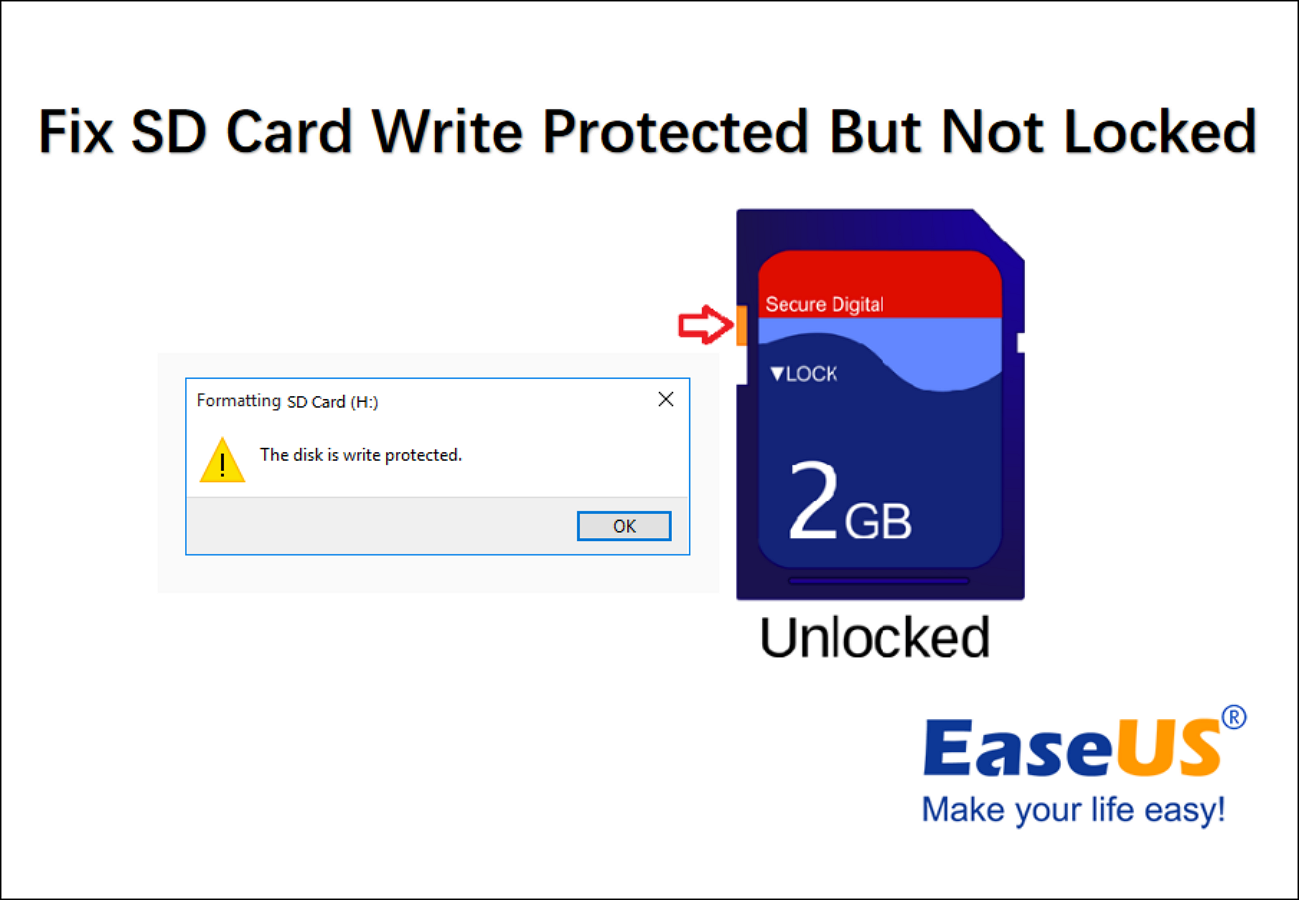
To format a write-protected SD card, you must first identify and disable the protection mechanism, which is either a physical lock switch on the card’s exterior or a logical "read-only" attribute within the software. Once the physical switch is toggled or the digital attribute is cleared using tools like Windows Diskpart or the Registry Editor, the operating system will allow a standard format through Disk Management or File Explorer.
SD cards are the backbone of modern portable storage, used in everything from professional 8K cameras to handheld gaming consoles. However, encountering a "The disk is write-protected" error can bring productivity to a halt. In 2026, while storage technology has become more resilient, the underlying protocols for write protection remain a common hurdle for users. This guide provides a deep dive into resolving these issues across various platforms.
Understanding the Nature of SD Card Write Protection
Write protection is a safety feature designed to prevent accidental data loss, such as unintended file deletion or formatting. This protection exists in two primary forms: hardware-based and software-based.
Hardware Write Protection
Most full-sized SD cards feature a physical sliding switch on the left side. When this switch is moved to the "Lock" position, it mechanically signals to the card reader that the device should not be written to. Interestingly, microSD cards do not have this switch themselves, but the SD adapters used to plug them into computers often do. If the slider is loose or damaged, it can inadvertently slide into the locked position during insertion.
Software/Logical Write Protection
Logical write protection occurs at the operating system or firmware level. This can be triggered by a specific bit set in the card's registry, a group policy setting on a corporate computer, or a file system error. Furthermore, modern SD card controllers are designed with a "fail-safe" mode. When the flash memory chips reach their end-of-life (measured in write cycles) or detect a critical hardware failure, the controller may permanently lock the card into a read-only state. This allows you to recover your data but prevents any further writing or formatting to ensure data integrity.
Step 1: Checking the Physical Lock Switch
Before diving into complex software commands, you must verify the physical state of the card. This is the most common cause of the "write-protected" error.
- Examine the Card: Remove the SD card from the reader. Look for a small plastic slider on the left edge.
- Toggle the Switch: If the slider is in the bottom (locked) position, slide it upward toward the gold contacts.
- Test the Connection: Re-insert the card. If it still shows as protected, try sliding the switch back and forth a few times. Occasionally, the sensor inside the card reader becomes dusty or misaligned and fails to detect the switch's position.
- The Tape Trick: In cases where the plastic slider has fallen off or the card reader's sensor is failing, some users find success by placing a small piece of clear adhesive tape over the notch where the switch used to be. This tricks the reader into "seeing" an unlocked card.
Step 2: Removing Write Protection via Windows Diskpart
If the physical switch is not the culprit, the next most effective method is using the Diskpart utility. Diskpart is a powerful command-line tool that can override volume-level attributes that standard formatting tools cannot touch.
Detailed Diskpart Procedure
- Open Command Prompt as Administrator: Click Start, type
cmd, right-click the result, and select "Run as Administrator." - Launch Diskpart: Type
diskpartand press Enter. - Identify the Disk: Type
list diskand press Enter. This will show all drives connected to your system. Identify your SD card based on its storage size (e.g., a 128GB card will appear as approximately 119GB). Note the disk number (e.g., Disk 2). - Select the SD Card: Type
select disk X(replace X with your disk number) and press Enter. Caution: Ensure you select the correct disk to avoid wiping your system drive. - Clear Read-Only Attributes: Type
attributes disk clear readonlyand press Enter. You should see a message stating "Disk attributes cleared successfully." - Verify and Format: You can now attempt to format the card within Diskpart by typing
clean(which wipes the partition table), thencreate partition primary, and finallyformat fs=exfat quick.
Step 3: Modifying the Windows Registry
In some instances, Windows itself might be configured to treat all removable storage as write-protected. This is often a security measure in corporate environments, but it can also occur due to software glitches or malware.
Editing the StorageDevicePolicies Key
- Press
Win + R, typeregedit, and press Enter. - Navigate to the following path:
HKEY_LOCAL_MACHINE\SYSTEM\CurrentControlSet\Control\. - Look for a folder (key) named
StorageDevicePolicies. If it does not exist, right-click theControlfolder, select New > Key, and name itStorageDevicePolicies. - Inside this key, look for a value named
WriteProtect. If it isn't there, right-click in the right pane, select New > DWORD (32-bit) Value, and name itWriteProtect. - Double-click
WriteProtectand set its Value Data to0. Click OK. - Restart your computer for the changes to take effect. This tells Windows to ignore any software-level write-protection flags for removable media.
Step 4: Using the Group Policy Editor
For users on Windows 11 or 12 Pro, Enterprise, or Education editions, a Group Policy might be blocking write access to removable drives.
- Press
Win + R, typegpedit.msc, and press Enter. - Navigate to Computer Configuration > Administrative Templates > System > Removable Storage Access.
- Locate the setting titled Removable Disks: Deny write access.
- If it is set to "Enabled," double-click it and change it to Not Configured or Disabled.
- Click Apply and Restart.
Comparison of Formatting and Protection Methods
The following table summarizes the primary methods for addressing write protection, categorized by their typical success rates and use cases in 2026.
| Method | Target Issue | Complexity | Risk Level |
|---|---|---|---|
| Physical Switch | Mechanical Lock | Very Low | None |
| Diskpart Command | Logical Attributes | Medium | Low (If disk selection is correct) |
| Registry Editor | System-wide Policy | High | Moderate (Can affect system stability) |
| SD Formatter Tool | File System Corruption | Low | None |
| Low-Level Format | Controller Errors | High | High (Permanent data loss) |
Step 5: Formatting on macOS (Disk Utility)
If you are using a Mac, the process differs. macOS handles write protection differently, often through the "First Aid" system within Disk Utility.
- Open Disk Utility: Navigate to Applications > Utilities > Disk Utility.
- Select the SD Card: Find your card in the sidebar. If it appears dimmed, it may be unmounted.
- Run First Aid: Click the "First Aid" button at the top. This will attempt to repair directory structures and permission issues that might be causing a read-only state.
- Erase (Format): If First Aid succeeds, click the "Erase" button. Choose ExFAT for cross-platform compatibility or APFS for Mac-only use.
Note: If macOS reports "Media is write-protected," and the physical switch is off, the card is likely physically failing.
Step 6: Utilizing Specialized Formatting Software
Sometimes, built-in operating system tools are insufficient because they adhere strictly to standard protocols. The SD Association (SDA) provides a dedicated tool called the SD Memory Card Formatter.
Unlike generic Windows or Mac formatting tools, this utility is specifically designed to follow the SD File System Specification. It can often reset the internal parameters of the card that Windows Disk Management cannot reach. In 2026, this tool remains the "gold standard" for restoring SD, SDHC, and SDXC cards to their factory-optimized performance.
Troubleshooting Persistent Failures
If you have tried Diskpart, Registry edits, and the physical switch, and the card still cannot be formatted, you may be facing one of the following scenarios:
- Controller Lockdown: As mentioned earlier, if the NAND flash has reached its wear limit, the internal controller permanently disables writing. There is no software fix for this; the card must be replaced.
- Fake Capacity Cards: Low-quality or counterfeit cards often report a higher capacity than they actually possess. When the "real" storage is full, the card may crash and enter a permanent write-protected state.
- Incompatible Card Readers: Some older USB 2.0 or 3.0 card readers struggle with high-capacity SDXC or SDUC (Secure Digital Ultra Capacity) cards. Ensure your reader supports the specific standard of your card.
Frequently Asked Questions
Can I format a write-protected SD card without losing data?
No. The act of formatting involves recreating the file system structure, which erases all existing data pointers. If you need the data, you must first remove the write protection using the Diskpart or Registry methods, copy your files to a safe location, and then proceed with the format.
Why does my SD card say it is write-protected when there is no switch?
This usually applies to microSD cards. While the small card lacks a switch, check the adapter you are using. If you are using a direct USB-C card reader, the write protection is likely logical (software-based) or the card's internal controller has locked the drive due to a hardware failure.
Is "write-protected" the same as "encrypted"?
No. Encryption (like BitLocker or VeraCrypt) scrambles data so it cannot be read without a key. Write protection simply prevents the modification of data. You can have a write-protected card that is not encrypted, or an encrypted card that is not write-protected.
Does formatting an SD card fix it forever?
Not necessarily. If the write protection was caused by a simple attribute error, a format will solve the problem. However, if it was caused by bad sectors or a failing controller, the error will likely return shortly after you begin using the card again.
What is the best file system for an SD card in 2026?
For cards 32GB and smaller, FAT32 is standard for compatibility. For cards 64GB and larger, exFAT is the preferred choice as it supports large file sizes (over 4GB) and is compatible with both Windows, macOS, and most modern cameras and smartphones.
Practical Recommendation
If you are dealing with a write-protected SD card, start with the physical switch and then move immediately to Diskpart. These two methods resolve over 90% of cases. If the card remains locked after trying these steps on two different computers, it is highly probable that the hardware has failed. In such instances, do not trust the card with important data even if you manage to "force" a format; the risk of future data corruption is high. Your next action should be to migrate your data to a new, high-quality UHS-II or SDUC card from a reputable manufacturer.
Image Gallery
Select an image to open it in a new tab.


Audrey Lin
Digital Regulations Analyst
