Replication Data in Modern Databases: Architecture, Strategies, and Best Practices

Data replication is the process of storing the same data on multiple nodes or servers to ensure high availability, fault tolerance, and improved performance. In 2026, this technology has evolved from simple backups into a dynamic, real-time synchronization layer that powers distributed systems, global applications, and complex cloud-native architectures across the enterprise landscape.
The Strategic Importance of Replication in 2026
In the current technological landscape of 2026, data replication is no longer a luxury reserved for high-traffic tech giants; it is a foundational requirement for any business operating in a digital-first economy. As organizations shift toward microservices and global deployments, the ability to keep data consistent across various geographical regions and cloud providers is paramount.
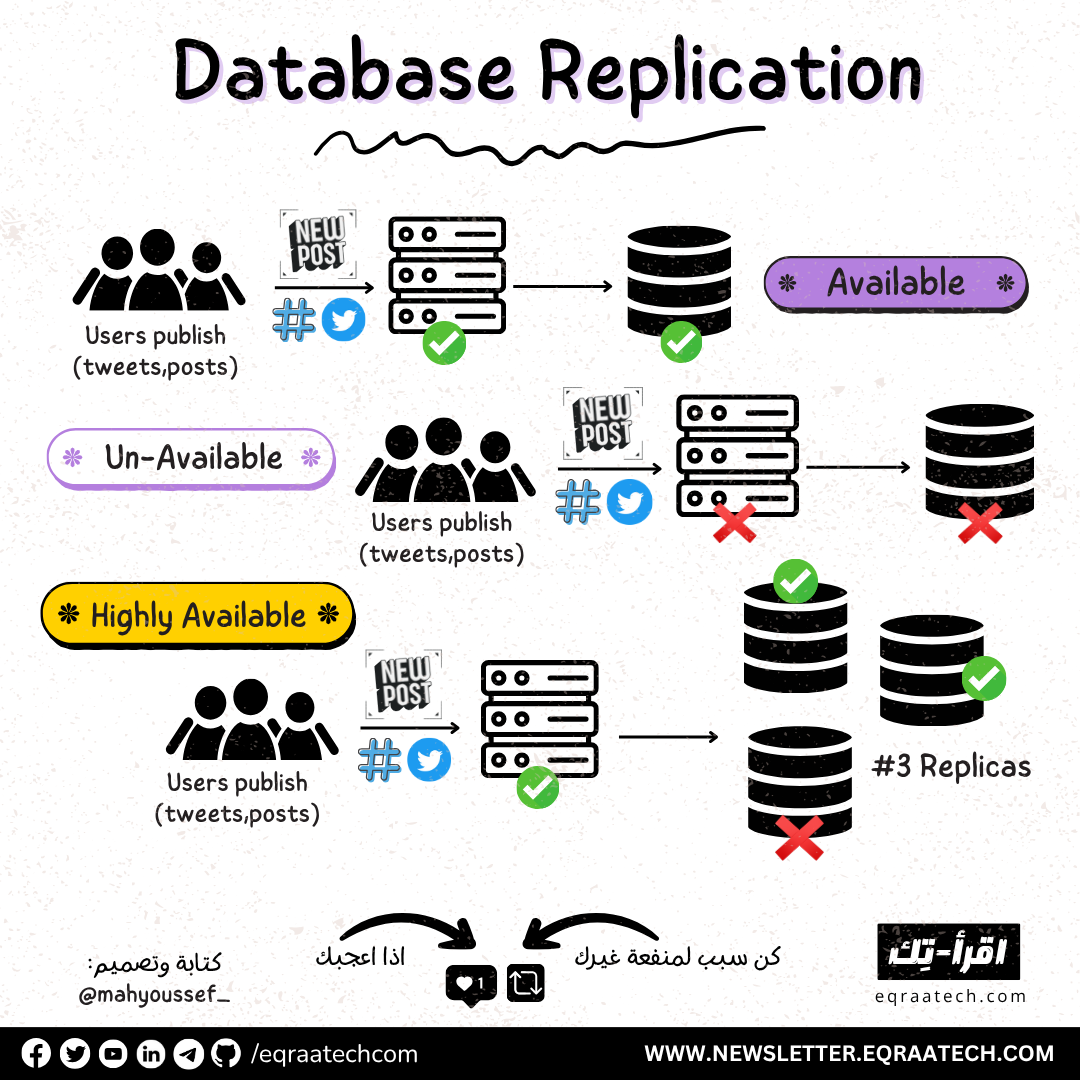
The primary driver for replication is high availability. In a single-node database, a hardware failure or a simple software crash results in immediate downtime. Replication mitigates this by maintaining "hot" or "warm" copies of the database that can take over operations within milliseconds if the primary node fails.
Furthermore, replication is the primary tool for latency reduction. By placing data replicas closer to the end-user—a practice known as geo-distribution—companies can significantly reduce the "time to first byte." For instance, a user in Tokyo accessing a database hosted in New York would experience significant lag. A local read replica in Tokyo, synchronized via modern replication protocols, eliminates this physical distance barrier.
Primary Replication Architectures
Modern databases generally utilize one of three primary architectural patterns for replication. Choosing the right one depends on the specific trade-offs between write performance, consistency, and complexity.
Single-Leader (Master-Slave) Replication
This remains the most common approach. In this model, one node is designated as the leader (master), and it is the only node that accepts write operations. The leader records every change to its local storage and sends those changes to all its followers (replicas/slaves).
- Pros: Easy to understand and implement; no write conflicts.
- Cons: The leader is a single point of failure for writes; if the leader is far from the user, write latency is high.
Multi-Leader (Master-Master) Replication
In this configuration, multiple nodes act as leaders, each accepting write requests. They then synchronize these changes with each other. This is typically used in multi-datacenter setups where each datacenter has its own leader to ensure local write speed.
- Pros: High write availability; handles datacenter-wide outages seamlessly.
- Cons: Extremely complex; requires sophisticated conflict resolution strategies (e.g., "last write wins" or custom merge logic) when two users update the same record on different leaders simultaneously.
Leaderless Replication (Dynamo-style)
Popularized by databases like Cassandra and Riak, this model allows any node to accept both reads and writes. To ensure consistency, the system uses a quorum mechanism. For a write to be successful, a certain number of nodes must acknowledge it.
- Pros: Exceptional fault tolerance; no single point of failure for any operation.
- Cons: Reads may return stale data; requires background processes like "read repair" or "anti-entropy" to maintain data integrity over time.
Change Data Capture (CDC): The Modern Standard
In 2026, the industry has largely moved away from trigger-based replication in favor of Change Data Capture (CDC). CDC involves monitoring a database's transaction log (such as the Write-Ahead Log in PostgreSQL or the Binlog in MySQL) to identify and capture changes as they happen.
The beauty of CDC lies in its non-intrusive nature. Because it reads from the log files rather than querying the tables directly, it places negligible overhead on the primary database engine. Modern CDC tools like Debezium or specialized cloud-native connectors then stream these changes into event buses like Apache Kafka. This allows for real-time synchronization between disparate systems, such as replicating data from an operational SQL database into an analytical Snowflake or BigQuery warehouse for immediate business intelligence.
Consistency Models and the PACELC Theorem
When implementing replication, engineers must navigate the trade-offs described by the PACELC theorem. This theorem extends the classic CAP theorem by stating: in the case of a network partition (P), one must choose between availability (A) and consistency (C); else (E), when the system is running normally, one must choose between latency (L) and consistency (C).
Most modern databases offer configurable consistency levels:
- Strong Consistency: Ensures that a read always returns the most recent write. This often requires synchronous replication, which increases write latency because the leader must wait for followers to acknowledge the data.
- Eventual Consistency: Replicas may lag behind the leader for a short period (usually milliseconds). This allows for maximum performance and availability but requires the application to handle potential "stale" reads.
- Causal Consistency: A middle ground where operations that are causally related are seen by all nodes in the same order, preventing confusing anomalies like seeing a reply to a comment before the comment itself exists.
Technical Comparison of Replication Methods
| Method | Latency | Data Freshness | Complexity | Ideal Use Case |
|---|---|---|---|---|
| Synchronous | High | Immediate (100%) | Moderate | Financial transactions, inventory management. |
| Asynchronous | Low | Near Real-time (99%) | Low | Social media feeds, logging, analytics. |
| Log-based (CDC) | Low | High | High | Data warehousing, microservice sync. |
| Snapshot | Very Low | Periodic (Low) | Very Low | Reporting where "yesterday's data" is sufficient. |
Operational Challenges and Troubleshooting
Implementing replication is not a "set it and forget it" task. Maintenance requires constant vigilance over several technical metrics.
Replication Lag
The most common issue is replication lag, the delay between a write occurring on the leader and it appearing on the follower. This is often caused by network congestion or the follower being underpowered compared to the leader. Monitoring tools in 2026 now use machine learning to predict lag spikes based on historical traffic patterns, allowing devops teams to scale replica resources proactively.
Schema Evolution
Modern applications change rapidly, and altering a database schema (e.g., adding a column) can break replication. In a replicated environment, schema changes must be handled with care. The "rolling update" pattern is standard: apply the change to followers first, then perform a failover to make a follower the new leader, and finally update the old leader.
Network Partitioning (Split-Brain)
In multi-leader or leaderless systems, a network failure can result in two sets of nodes believing they are the "true" version of the database. This is known as a split-brain scenario. Modern consensus algorithms, such as Raft or Paxos, are used to prevent this by requiring a majority (quorum) of nodes to agree on the state of the system before any operation is finalized.
Implementation Prerequisites and Steps
Before deploying a replication strategy, ensure the following requirements are met:
- Synchronized Clocks: Use Network Time Protocol (NTP) or hardware-based atomic clocks (like those used in Google Spanner) to ensure all nodes agree on the timing of events.
- Network Bandwidth: Replication creates significant internal traffic. Ensure the backbone between your primary and replica nodes has at least 10Gbps capacity for high-volume databases.
- Unique Identifiers: Use UUIDs rather than auto-incrementing integers for primary keys to avoid collisions in multi-leader setups.
Step-by-Step Setup Guide (General Framework)
- Select the Replication Mode: Decide between synchronous (safety) or asynchronous (performance).
- Configure Logging: Enable logical logging on the source database to allow the capture of change data.
- Initial Seeding: Take a snapshot of the primary database and restore it to the replica node to establish a baseline.
- Establish Connectivity: Configure the replica to point to the leader's log stream and begin "replaying" transactions from the snapshot point forward.
- Validation: Use checksum tools to verify that the data on the follower exactly matches the leader.
Frequently Asked Questions
What is the difference between data replication and data backup?
Data replication is a continuous process designed to keep a "live" copy of data available for immediate use or failover. Data backup is a point-in-time "cold" copy stored for long-term recovery (e.g., recovering from accidental deletion or a ransomware attack). You need both for a robust data strategy.
Can replication replace a load balancer?
No. While replication provides the multiple nodes necessary for load balancing, you still need a load balancer (or a database proxy) to distribute incoming read requests across those replicas efficiently.
How does replication affect database performance?
Synchronous replication adds latency to every write operation because the leader must wait for the replica to respond. Asynchronous replication has minimal impact on write performance but utilizes CPU and network resources to transmit the log data.
Is it possible to replicate data between different types of databases?
Yes, this is known as heterogeneous replication. It is typically achieved using CDC tools that translate the source database's log format (e.g., Oracle) into a neutral format (like JSON or Avro) before applying it to the destination database (e.g., PostgreSQL or MongoDB).
How many replicas should I have?
The standard for high availability is "N+2." Having at least three nodes (one leader and two followers) ensures that if one node fails, you still have a redundant pair remaining, maintaining both availability and fault tolerance during the repair process.
Expert Recommendation for 2026
For most modern enterprise applications, the recommendation is to utilize asynchronous log-based replication (CDC) for read-heavy workloads and Multi-Region Synchronous Replication for mission-critical financial or identity data. By decoupling the replication stream from the application logic using an intermediate event broker like Kafka, you create a resilient architecture that can scale horizontally without compromising data integrity. Always prioritize monitoring your replication lag and disk I/O on followers, as these are the earliest indicators of a looming system failure.
Image Gallery
Select an image to open it in a new tab.


Gemma Collins
Arts and Pedagogy Writer
